Thursday, 31 January 2019

Review: The Last

The Last The Last by Hanna Jameson
My rating: 5 of 5 stars

“Nadia once told me that she was kept awake at night by the idea that she would read about the end of the world on a phone notification. It wasn’t exactly Kennedy’s Sword of Damocles speech, but I remember that moment word for word.
“For me, three days ago, it happened over a complimentary breakfast.”

‘The Last’
by Hanna Jameson is an End of the World novel but a thoroughly 21st Century take on the Apocalypse. Conference attendees at a secluded countryside hotel south of Zurich watch their phone screens in horror as World War III erupts. The world’s capital cities fall one by one on social media. Online footage showing the vaporisation of London “didn’t seem as real as the headlines” seeming “too fast, and too quiet.” And then, almost worse than the end of the world, the internet goes down…
The story that follows is told in the diary of Dr. Jon Keller, an American lecturer, who chronicles his and his fellow guests’ reactions to the limited news they have, to the strange coloured clouds, the lack of rain, of sunlight, to the fear of radiation poisoning. Some cannot cope and commit suicide; others deal with practicalities, rationing fuel and resources, finding food, burying the dead. And then, when the water runs cloudy and tastes off, an exploration of the water tanks on the roof reveals a dead body, a murder that occurred in the days leading up to the nuclear war.
‘The Last’ is an exciting and original novel told in a very compelling and naturalistic way. The journal form is perfect for a narrative in which the protagonist literally has no knowledge of the state of the world outside the remote hotel location. This is not a big apocalyptic novel, it is a small scale story of survival of people coping with the unknown.

‘…No one panicked, we didn’t go all Lord of the Flies. It could be fine.’

Of course, as the survivors eventually have to venture outside the hotel, we suspect that it will not be fine. The rhythm of Keller’s journal entries changes as key events occur. We go from a series of short daily entries commenting on his depression and then boredom to longer, frantic passages bringing us up to date with major events which have happened in extended periods during which Keller has been away from his book.
I loved this novel. I loved the concept when I heard about it on ‘Two Crime Writer’s…’ podcast. I have never read Hanna Jameson before and, while I understand this book is something of a departure for her, I really like the way she writes and will have added her previous books to my TBR list.

View all my reviews

Tuesday, 29 January 2019

Review: The Silent Patient

The Silent Patient The Silent Patient by Alex Michaelides
My rating: 5 of 5 stars

“As you will see, it’s an incredible story - of that there is no doubt. Whether you believe it or not is up to you.”

Theo Faber is a psychotherapist who develops an intense interest in, if not an obsession with, the case of Alicia Berenson, a relatively famous artist who, having murdered her husband has refused to speak a word and has been confined to a secure psychiatric unit in London. Despite the clinic’s shaky financial viability, Faber sets his sights on, and succeeds in gaining, a position there purely for the opportunity to treat Alicia and, in the process, perhaps persuade her to speak and reveal the truth about why she shot and killed the husband whom she appeared to love.

Alex Michaelides has written a very competent, entertaining mystery. The short chapters propel the story along with the added technique in which the last line of one chapter feeds straight into the first of the next, often contradictorily. “‘She won’t like it one bit.’” … “‘I think it’s a great idea.’” The author uses this sparingly but enough that it makes you smile when it happens and anticipate the next one. The book begins with extracts from Alicia’s diary and these reappear at stages to break up Theo’s narrative and reveal elements of her past and of her state of mind leading up to the murder. And then there is a twist.

I’m not a huge fan of ‘the twist’. There is a vogue at the moment to elevate ‘the twist’, to make it the reason to read a novel. And often it is contrived and disappointing. However, when the moment arrives in ‘The Silent Patient’ it is so unexpected and so well done that it makes the reader question everything that has gone before. I stopped and re-read the chapter. And then I read it again. I took a moment before moving on to the conclusion of the story. It is excellent and turns a good, competent mystery into a five-star thriller. The key to this is that Michaelides has laid the groundwork - the climax arises naturally from the plot, and it rings true. It is like the camera changes and you see what has gone before through a different lens. And, crucially, it makes you want to go back and read it again.

I enjoyed this a lot and it deserves to sell and to be talked about. I look forward to what comes next from Alex Michaelides.


View all my reviews

Monday, 21 January 2019

Review: Gone by Midnight

Gone by Midnight Gone by Midnight by Candice Fox
My rating: 5 of 5 stars

While I enjoyed Candice Fox’s ‘Redemption Point’, her second novel featuring Queensland PIs, Ted Conkaffey and Amanda Pharrell, I struggled to relate to Conkaffey, his every action informed by a false accusation of child abduction to the extent that it slowed the plot. Conversely, Amanda, convicted of a murder she did commit, albeit accidentally, was a whirling dervish, a ball of energy with no social graces who offended all around her while displaying almost Holmesian deductive skills.
‘Gone By Midnight’, the third in the series, is a tighter novel, fast-moving and with fewer flaws. Ted Conkaffey, perhaps due to the presence of his infant daughter who is staying with him for the first time since his fall from grace caused the breakup of his marriage, is a much more sympathetic character. His anger, and shame, at those who still suspect him despite his no longer being a ‘person of interest’, and his love for his daughter, drives him as he and Amanda try to locate an eight-year-old boy who has disappeared from a local hotel.
Amanda remains a thoroughly entertaining character. She ‘hates’ children, shows little empathy for the missing boy or his parents, sees the boy’s disappearance as a competition the winner of which is rewarded with a cake, and makes friends with a criminal biker gang while making enemies within the police force.
‘Gone By Midnight’ is a more complete and confident novel than ‘Redemption Point’. The mystery is intriguing and entertaining, the characters more fully realised, the dialogue sharp and I look forward to the next in the series.

View all my reviews

Friday, 18 January 2019

The Hunting PartyThe Hunting Party by Lucy Foley
My rating: 4 of 5 stars

Lucy Foley’s “The Hunting Party” is an excellent claustrophobic psychological thriller that questions how well people really know each other.
Nine entitled friends travel to the Scottish Highlands for a New Year’s Celebration where a tragedy occurs. The story is told in two timelines, events leading up to the disappearance of one of the guests, narrated in the first person by three of the female guests, and the aftermath, again in the first person, by the female caretaker of the Highland Lodge. At intervals, we also learn, in a third person narrative, about the estate’s gamekeeper, a man with a hidden past.
The story is full of red-herrings and misdirection and the author cleverly hides the identity, and even the gender, of the missing guest, a technique that is only very rarely apparent to the reader - there were a couple of occasions where I thought, “wouldn’t it have been more natural for the character to say the name”, but they were few and far between and did not spoil my enjoyment of the story.
There are few, if any, likeable characters in the novel and even the best of them have some darkness in their past that affects their actions but that is not a criticism - they all rang true, and it is fun to piece together what is really behind the unreliable narrators. Apparently optioned for TV, the story would make an excellent miniseries.


View all my reviews

Wednesday, 9 January 2019

Review: The Chestnut Man

The Chestnut Man The Chestnut Man by Søren Sveistrup
My rating: 5 of 5 stars

While I have enjoyed a lot of what could be termed ‘Scandinavian Noir’ I have always found the television from the Nordic countries to be more dynamic and involving than their literature. Series such as The Killing and The Bridge, despite complex plots, focus as much on the human element as on solving the crimes. Søren Sveistrup, writer of the former series has, perhaps not surprisingly, written a novel more akin to those television series than to his contemporaries on the bookshelves.
The Chestnut Man is a fast-moving crime novel. The plot, as complex and intriguing as it is, fairly thunders along. Two detectives, the young ambitious, Naia Thulin and, burnt out jaded Europol cop, Mark Hess, who has been sent back to Copenhagen while an investigation is held into possible misconduct, are initially suspicious of each other. However, as they investigate the murders of two women in separate incidents, the pair are drawn together as their theories that the crimes are connected, not only to each other but possibly to the disappearance of a senior politician’s daughter a year ago, put them out of step with their colleagues who consider the early crime solved as a murder, despite the lack of a body.
Like The Killing, The Chestnut Man is a mixture of police procedural, politics and familial relationships and it is the impact of the crimes on the families - the Government minister and her husband who are struggling with the loss of their daughter, Thulin’s distress at neglecting her own daughter because of her career ambitions - which, I feel, sets the novel apart. An entirely satisfying crime story, the book also sheds some light on another side of the Danish capital, the poorer tenements, the immigrant communities.
I enjoyed The Chestnut Man immensely and look forward to more from Søren Sveistrup, especially if he revisits Thulin and Hess.

View all my reviews

Wednesday, 14 November 2018

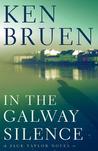
Review: In the Galway Silence

In the Galway Silence In the Galway Silence by Ken Bruen
My rating: 5 of 5 stars

“The Irish can abide almost anything save silence.”

A few paragraphs into a new Jack Taylor novel and you hear the musicality and fall into the familiar rhythms of Ken Bruen’s prose. It is distinctive, like listening for the first time to your favourite band’s new album, you instantly the instrumentation and look forward to new tunes. Nobody in crime fiction writes like Ken Bruen. It is not just the words he uses, it is the way
he
puts
them
on
the
page.
Ex-Garda, Jack Taylor is a violent and poetic man. He beats his problems in the most literal way possible, with a hurley. Jack cares about people, yet he is self-destructive. He appears to have a death wish, yet he consumes, and enjoys, popular culture (I have gained so much from exploring books or albums recommended by Jack Taylor, although he may have taken one too many to the head - considering “Perfect” by Ed Sheehan to be, well, perfect).
Bruen’s plots are like a fever-dream. Jack narrates the madness that surrounds him, in this case a deranged killer and a returning out of the blue ex-wife, while commenting on craziness in the wider world - Donald Trump, Harvey Weinstein, Brexit - which only serves to heighten the sense of unreality.
I love these books and, while jumping aboard here without reading any of the previous dozen books might not be the best recommendation, if you can find the rhythm, you will definitely enjoy the song.


View all my reviews

Review: The Haunting of Hill House

The Haunting of Hill House The Haunting of Hill House by Shirley Jackson
My rating: 5 of 5 stars

“We couldn't even hear you, in the night....
No one could. No one lives any nearer than town. No one else will come any nearer than that.”


I’m not sure what I was expecting from The Haunting of Hill House. Or rather, I thought I knew what I was expecting, but wasn’t sure. Which is slightly different. It’s a horror story, right? It’s about a haunted house - it says so in the title. The book has been on my to-read list for perhaps longer than any other, since I was a teenager and read Stephen King’s Danse Macabre when it was first issued in paperback. King loved Hill House. It is all over Danse Macabre. But it was out of print in UK until 2009. Still, that is almost ten years ago and, still, I didn’t read it.
So, it being Hallowe’en, and with the new adaptation on Netflix (which, it turns out is excellent, but is not an adaptation, rather a reimagining), I decided it was time to read this really scary ghost story. And it is really scary, but is it a ghost story? Is Hill House haunted?
The writing is excellent, the prose lyrical (The opening and closing paragraphs are rightly lauded as classics but there are many similar passages). The dialogue is perhaps a little old-fashioned but it was written 60 years ago and it fits the gothic storytelling. Yet, on finishing the novel I was slightly disappointed. There are certainly some moments which make the hairs stand up on the back of your neck (“God! Whose hand was I holding?”) but there are so many conversations in the book about being scared, about the nature of being scared, almost looking forward to being scared. The writing is excellent though and so I gave it four stars.
And, yet. In the days since I finished the book, images and scenes have stayed with me. I am ‘haunted’ by some of the imagery and find myself replaying some of the key scenes in my head.

“Fear," the doctor said, "is the relinquishment of logic, the willing relinquishing of reasonable patterns. We yield to it or we fight it, but we cannot meet it halfway.” 

The characters surrender themselves willingly to the idea of being scared, in the same way as many of us do when reading horror fiction or watching a scary movie. And, whether there is something in Hill House which takes advantage of that, or whether it is something within the characters which tip them, particularly Eleanor, into madness, I am still unsure. And the genius of Shirley Jackson is that, two weeks later, I am still thinking about it.


View all my reviews

Tuesday, 13 November 2018

Review: Aja

Aja Aja by Don Breithaupt
My rating: 3 of 5 stars

"Bringing a post-Gershwin compositional gusto to post-Dylan subject matter (and filtering it through the lens of post-Nixon America)."

There is always something for the music-lover to glean from these little books, the 33 1/3 Series, each of which focuses on a 'classic' album. Some of them centre on what the music means to the writer and how it fits into his or her life; some appear only tangentially related to the album in question. Of those that I have read, this one goes deeper into the form of the music and its construction, perhaps a little too deep at times but it does suit Steely Dan and Aja.

Author, Don Breithaupt obviously loves the album and understands music theory and he puts Aja in context, not only with what was happening in the music industry at the time of its release in 1977, but also within Donald Fagen's and Walter Becker's output and their influences with inform the album. There is a large part of the book devoted to the recording of the album and I personally love that kind of stuff although, even for me, the in-depth examination of poetic techniques such as enjambment or the relationship between E9sus4 and Amaj9 chords gets a little too much. Breithaupt is also fond of purple prose such as that quoted at the start of the review but all of this is forgiven when it leads, as this book does, to a fresh listen to, and new appreciation of, the music.

View all my reviews

Monday, 29 October 2018

Review: The Savage Shore

The Savage Shore The Savage Shore by David Hewson
My rating: 4 of 5 stars

Nic Costa, together with Teresa Lupo, Leo Falcone and Gianni Peroni, returns for the first time in seven years in David Hewson’s tenth book in the series. This time the Roman team are well out of their comfort zone having been dispatched to Calabria, in Italy’s toe, in preparation for the defection of a mafia crime boss. While the team pose as holidaymakers in a coastal town, Costa has gone undercover in the ‘Ndrangheta.
It has been quite a while since I first discovered David Hewson’s Italian-set crime series with ‘The Seventh Sacrament’ and I am so glad I got past that novel’s title and cover which, to my mind, were positioned to take advantage of the success of Dan Brown and the like - in truth the series could not be further from that type of thriller. Hewson writes very literate, thought-provoking mysteries with well-drawn, sympathetic characters, and ‘The Savage Shore’ is no exception.
The story is told at a slow, perhaps old-fashioned, pace but that is not a criticism. The prose is beautiful, poetic, and the setting, in one of Italy’s least well-known regions, is brought vividly to life.

“Hands running through dust on the ancient balustrade, they descended and walked out into the empty piazza by the church. The last of the summer sun dappled the snaking, shimmering channel that stood between Calabria and Sicily, a distant necklace of street lights defining the shore. Across the strait stood the mound of Etna, the only clouds around clinging to its side like needy children, the red haze of its volatile summit a dim rim of fire against the darkening sky.”

The book is a mixture of the romanticism and reality of life in an area seemingly forgotten by Italian, and European, politics - on one side, the myths and legends with which each chapter begins and which tell how the Calabrian people came to inhabit this rugged landscape; on the other, the petty crime, the forced servitude of African immigrant sellers of fake luxury items. Despite clear evidence of these realities, Nic Costa is subtly enticed by the ‘idea’ of the ’Ndrangheta, described in the fictional guide as “Criminals ‘full of a strong goodness’”, and it is clear that David Hewson fell for Calabria when researching the novel, but that is forgivable perhaps, given how much I want to see the region after reading about his version of it. I really enjoyed ‘The Savage Shore’ and hope it won’t be another seven years before we revisit the characters.


View all my reviews

Tuesday, 16 October 2018

Review: Thin Air

Thin Air Thin Air by Richard K. Morgan
My rating: 4 of 5 stars

Thin Air is Richard Morgan’s first SciFi novel in eight years. I have to admit that I was unaware of Morgan until the Netflix adaption of his first, Altered Carbon, but, inspired by that, I then picked up the three books in that series. The latest, although set in a different ‘universe’ shares much with the earlier trilogy.
Thin Air is a hard-boiled noir. It may be set on Mars but is as influenced by Chandler, Hammett and MacDonald as it is by Ray Bradbury. The protagonist, Hakan Veil, bio-engineered from childhood to be an enhanced corporate soldier, is much more Mike Hammer than Philip Marlowe. Veil is essentially a thug who solves problems with his fists, always aided by a built-in AI. Having been arrested after one such ‘solution’, Veil is blackmailed into acting as bodyguard for a representative of Earth auditors, sent to interrogate the finances of ‘frontier’ businesses.
The labyrinthian plot involves political and corporate corruption, organised crime, femme fatales, a missing lottery winner and a lot of violence. I admit I got a little lost at times but The Big Sleep is one of my favourites so not being entirely sure of what is going on is not necessarily a problem. Thin Air is no The Big Sleep but it is a good read. Mars is realistically realised and the mixture of science fiction with frontier town lawlessness is fascinating.
On the evidence of Thin Air and the Altered Carbon-series, Richard Morgan is a master of the futuristic, hard-boiled hybrid and I would not be surprised to see Hakan Veil join Takeshi Kovacs on screen.


View all my reviews

Sunday, 23 September 2018

Review: Going on the Turn

Going Round the Bend Going Round the Bend by Danny Baker
My rating: 4 of 5 stars

I have a friend to whom nothing ordinary has ever happened. His life seems to be full of spur of the moment, sometimes ill-advised, decisions that lead to situations which, at least as he tells them, reduce the listener to tears of laughter. His gift is that he tells these stories in great detail and, despite meandering from one situation to the next, seemingly unconnected, he eventually gets back to the original point and always with a killer punchline. Danny Baker shares this gift.

‘Going on the Turn’ is the third volume of Danny Baker’s autobiography and essentially takes his story from the mid-nineties until late 2012, with many flashbacks. Like in the previous volumes, Baker discusses the absurd and coincidental as his stories crash into each other as it hurtles along at a frantic, and extremely entertaining, pace. The book contains some of his funniest tales - throwing his records in a skip; meeting David Bowie; NOT meeting David Bowie; NOT smoking cannabis - and also the harrowing, honest description of his cancer treatment in 2012. But even the latter is full of wit and humour as is the chapter about his father’s death.

If you like Danny Baker, and I do, then the only thing better than reading his latest memoir is to listen to him read it in the audiobook version. And then go straight to his vitriolic, chaotic and triumphant final show for BBC Radio London following his sacking by homogenising pen-pushers (It’s still on youtube).

View all my reviews

The Buffalo Hunter Hunter by Stephen Graham Jones

Etsy Beaucarne is an academic who needs to get published. So when a journal written in 1912 by Arthur Beaucarne, a Lutheran pastor and her g...